



Did you know that an estimated 67% of new pools are saltwater pool systems? 51% of communities investing in saltwater pools for their residents say it’s a vital wellness amenity. Given their growing popularity, it’s fair to ask: Do saltwater pools need different cleaning equipment?
The short answer is yes. Below, you’ll learn why and how to choose the best saltwater pool maintenance gear.
How Saltwater Pools Work
A saltwater pool isn’t like a miniature ocean in your backyard. It’s much more subtle and luxurious. Instead of dumping harsh chlorine into the pool while breathing in concentrated chlorine gas, a salt system works by adding salt (sodium chloride).
Then, through a process called electrolysis, the sodium is separated from the chloride, leaving chlorine.
This may sound like we just took the long way to get to the same result. But we assure you that’s not what just happened. When you make your own chlorine from salt, you generate a much gentler, evenly distributed, and stable chlorine. So, it’s easier on the skin, your pool, your pool’s equipment, and your lungs. Say goodbye to that chlorine smell!
On top of that, because your pool system is constantly making new chlorine, the levels can stay low and steady, which can reduce saltwater pool maintenance time significantly.

Common Cleaning Gear Across All Pools
No matter what kind of pool you have, there are certain types of gear you need to keep the water safe and pool blue.
You need a good filtration system to catch dirt, leaf debris, bugs, etc. You need a skimmer to remove large debris that lands on the pool, preferably before it sinks, requiring vacuuming.
You certainly need a sturdy brush to scrape the sides and bottom periodically to ensure algae aren’t able to defy biology and begin to grow. It happens.
But there’s a point where the similarities end.
Saltwater vs Chlorine Pool: Cleaning Gear Differences
The Saltwater System
Saltwater systems require a salt chlorinator (also called a salt cell). This piece of equipment converts salt into chlorine.
While less maintenance is certainly an advantage of a saltwater pool, these systems aren’t hands-off. You’ll have to clean the cell regularly to prevent buildup and replace it every few years.
Because salt is naturally corrosive, you’ll also want gear made with salt-resistant materials, from pumps to hand tools to ladders. Metals like common steel and aluminum seem strong. But they don’t stand up to salt for long.
And testing water chemistry is especially important—keeping pH, alkalinity, and salt levels balanced will prevent scaling and protect your equipment. You’ll need a specialized saltwater pool test kit to ensure your numbers are accurate.

The Chlorine System
Chlorine pools skip the salt cell and instead use tablets, granules, or liquid chlorine. That means fewer worries about corrosion or specialized equipment. The cleaning tools can be standard, and maintenance often comes down to adding chemicals when needed and brushing away algae before it takes hold. You’ll need to keep the water balanced to reduce this risk.
So while both pool types share the same “core kit,” saltwater pools ask for a bit more attention in the chemistry and equipment department.
Blue Square Q360+ Pool Cleaning System
Saltwater can increase your worry-free swim days by making maintenance faster and easier, but having a pool always requires maintenance—unless it doesn’t.
If you want to make pool care easier, automation is going to be your best friend. That’s where the Blue Square Q360+ pool cleaning system comes in.
Instead of spending your weekends brushing walls and chasing leaves with a net, the Q360+ does the work for you. It uses a series of in-floor cleaning jets that rotate water currents, pushing dirt and debris straight toward the drain. The result? A pool that stays cleaner with less hands-on effort.
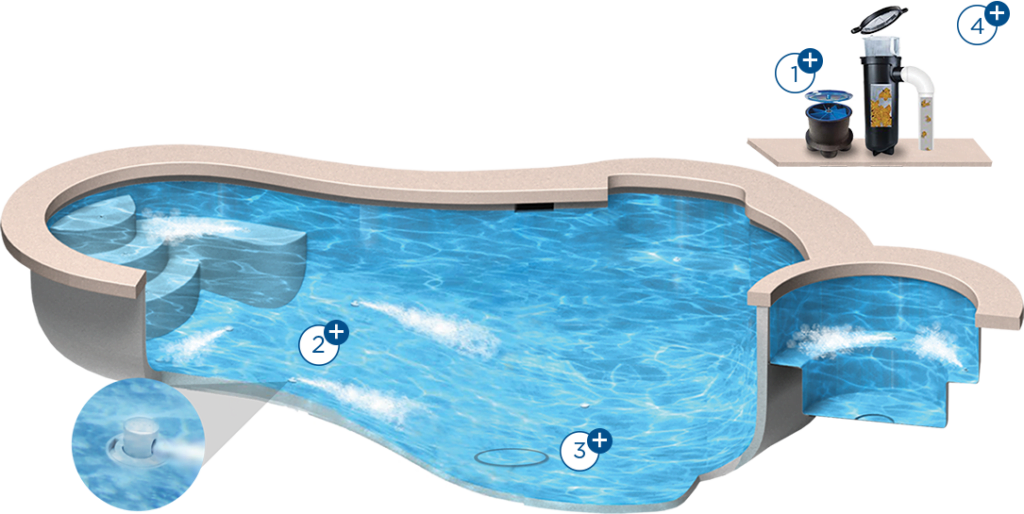
As a bonus, when a pool stays cleaner, your saltwater system also works more efficiently, requiring fewer chemical adjustments and less overall chemical expenditure. The Q360+ is built to withstand the salty environment that can wear down other equipment. That means you get powerful cleaning, less maintenance, and gear designed to last longer.
It’s a smart upgrade whether you’re managing saltwater or chlorine.
Tips to Maintain Saltwater Pool Cleaning Gear
Saltwater pools can be easier on your skin, but not always on your gear. With a little upkeep, though, you can make everything last longer.
- Start with the salt cell. Give it a good cleaning at least once a year, or more often if you notice buildup. Rinse it with a mild acid solution to clear away scale, but only as needed—too much cleaning can shorten its life.
- Saltwater can cause corrosion. Equipment like ladders, heaters, and poles must be made out of resistant materials like cupronickel, titanium, or certain high-grade stainless steels. If the gear doesn’t say it’s salt-safe, talk to someone at your local pool supply store (not a big box store).
- Keep your water chemistry balanced. When pH or alkalinity drifts out of range, scaling and corrosion speed up. A little testing and adjusting each week saves you from costly repairs down the line.
The automation of a Blue Square Q360+ pool cleaning system makes easy work of keeping your water balanced. To learn more about the time-saving technology, download our brochure.
Resources:
https://www.lowes.com/n/buying-guide/saltwater-pools-vs-chlorine-pools


