
Pool ownership is really a labor of love. You and your family can certainly get a lot of enjoyment out of your pool, but it does require a good deal of ongoing maintenance to keep it clean, clear, and safe.
This means paying attention to the proper chemical balance and water temperature, removing any junk or potential obstructions quickly, protecting it from seasonal weather, and making sure to clean it on a regular basis.
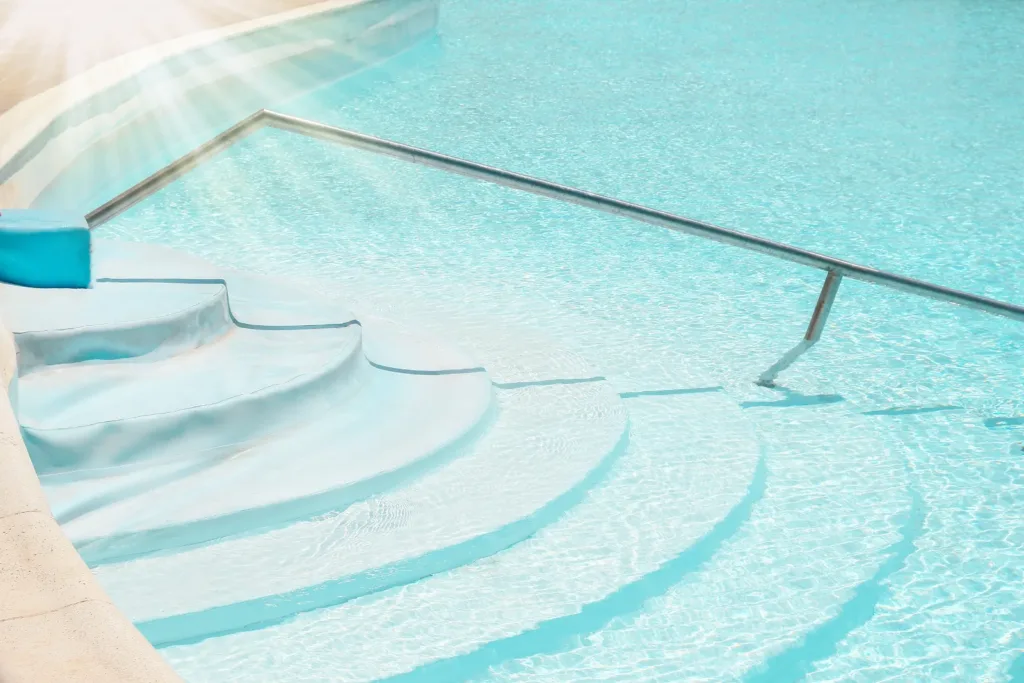
It also means making sure areas like your pool steps and walkways are well-maintained. Keeping the area clean of dirt and algae build-up not only makes sure your pool and surrounding areas always look great, but it also makes things less slippery and all around safer for swimmers wanting to enter and exit.
So if you’re looking for pool step cleaner tips, a useful cleaning system, and other smart strategies for learning how to remove green algae from pool concrete, continue reading.
Why are my pool steps getting brown?
There are all sorts of reasons for your pool to become dirty over time, especially the step area. Over time and without regular maintenance, the area can start to look discolored and slippery. Brown and green are common colors for discoloration.
Regular use certainly contributes to the buildup of dirt and grime, but even if people don’t swim in the pool too often, there are still natural and human-caused forces that can add to the amount of algae and dirt.
- Weather. Wind and rain can bring in leaves, dust, and other debris.
- Mineral growth. If your area has high levels of hard water in its irrigation system, it can lead to the build-up of white mineral deposits on the steps and patio area.
- Algae. Sunlight and warmer water, which are usually two great combinations, also promote the growth of algae over time. The steps are a prime area for algae growth, since they’re right on the edge of the water and generally a little cooler.
What tools work well for cleaning?
Pool owners should consider acquiring a variety of tools to help keep it tidy. They can include:
- A good pool skimmer. These can be used to catch and retrieve floating debris like leaves. These can be automated rather than trying to get it all by hand.
- A pool brush. This tool is recommended when trying to tackle cleaning pool steps. It can be used to scrub the surface and remove basic dirt, but it may not be able to take care of the toughest spots, which could require more advanced cleaning tools and products.
- Stronger solutions of pool step cleaner. These items focus more on getting rid of the larger, more ground-in stains. Typically, they require putting the material on the tough spots, waiting for the recommended amount of time, and then scrubbing and wiping. Beyond commercial products, other, more natural product solutions that are known to break up and dissolve stains and algae include baking soda or vinegar.
- In-floor systems. Another option that makes pool cleaning and step cleaning more appealing is an in-floor system. For instance, Blue Square’s Q360+ provides automated cleaning services, which means you don’t have to spend a lot of time with a brush and can let the cleaning jets take care of things.
- Pressure washer. This tool attaches to a hose and blasts away dirt and algae fairly rapidly. The correct amount of pressure is important: too weak a water flow may not remove stubborn stains that well, but too strong a blast could start to damage surface areas.


Step-by-Step Guide: How to Clean Swimming Pool Steps
Keeping your pool steps spotless not only improves the look of your pool but also makes it safer for everyone. Here’s a practical, step-by-step guide to cleaning swimming pool steps effectively.
Step 1: Gather Your Supplies
Before you start, make sure you have everything you need:
- Pool brush (preferably with stiff bristles)
- Pool skimmer
- Suitable pool step cleaner (commercial or DIY solutions like baking soda, vinegar, or a bleach solution)
- Gloves and safety glasses
- Bucket or spray bottle
- Optional: pressure washer, chlorine tablet
Step 2: Remove Debris
Use a pool skimmer to remove any floating debris, leaves, or dirt from the water and the surface of the steps. This prevents clogging and makes scrubbing more effective.
Step 3: Brush the Steps
Using your pool brush, scrub the pool steps thoroughly. Focus on visible dirt, algae, or stains. For concrete steps, use a stiffer brush; for vinyl or fiberglass, use a softer brush to avoid scratches.
Step 4: Apply Cleaning Solution
Choose your cleaning solution:
- Bleach Solution: Mix 4 parts water to 1 part bleach, spray or apply with a brush.
- Vinegar Solution: Mix 1:1 ratio of white vinegar and water.
- Baking Soda Paste: Mix baking soda with a small amount of water to form a paste. Apply your chosen cleaner to the steps, concentrating on stained or algae-prone areas. Let it sit for 5–10 minutes.
Step 5: Scrub Again
After letting the solution work, scrub the steps again to lift away stubborn dirt or algae. For tough spots, apply more cleaner or use a chlorine tablet directly on the stain (if safe for your pool surface).
Step 6: Rinse or Circulate Water
Rinse off the cleaning solution by splashing pool water over the steps, or allow your pool’s circulation system to dilute and filter out residues. If using a pressure washer, rinse with care, ensuring not to damage the step surface.
Step 7: Inspect and Repeat as Needed
Check the steps for remaining stains or slippery spots. Repeat steps 4–6 as needed for stubborn areas.
Step 8: Prevent Future Buildup
- Clean steps weekly or after heavy use/weather.
- Keep water balanced to minimize algae.
- Consider installing automated cleaning systems for easier maintenance.
Pro Tip: For best results, inspect your pool steps regularly and address small stains before they grow. Quick action makes cleaning faster and helps maintain a safer pool environment.

How do you remove green algae from pool concrete?
Common cleaning methods suggest starting with a stiff brush to break up dirt and larger algae clumps. Follow this by using a cleaning solution that gets a little deeper into any cracks and crevices in the steps. It’s OK if some algae goes in the water during the scrubbing process – much of it will get filtered out. Shocking the pool at the end also helps.
The cleaning solution should include ingredients that are known to kill algae, such as a bleach – try a ratio of 4 parts water to1 part bleach. Vinegar solutions can also be used, at a 1:1 ratio. Both of these can be used as a spray.
A baking soda paste made with water can be applied directly to the steps, which will help remove tougher algae areas. Another suggestion is to use a chlorine tablet right on the stairs.
How often do you need to clean pool steps?
Pool pros may suggest cleaning daily. But this isn’t always feasible for everyone’s time and schedule.
Certainly, the pool should be inspected every day, and any large debris should be removed soon before it can potentially contaminate the water, block water flow, or cause slippery, unsafe conditions. It should be cleaned after a windstorm, since the weather could bring in dust and leaves.
But some items, like the steps, can be done less frequently, perhaps once a week. It depends on the type of debris that builds up.
For instance, dirt and dust can be just scrubbed away. But algae should be removed quickly – the longer it sits, the larger it can grow and the more damaging it can be to your pool.
Large amounts of algae can potentially spread into more of the water. Large concentrations can even be poisonous to people or animals, can make the pool start to look and smell bad, and can be slippery and dangerous.
Planning ahead
Part of smart pool maintenance is looking for ways to save time and effort. This means it’s great to find ways to automate the cleaning process before things get out of control and small stains are able to grow into larger stains. If things go on too long and the condition deteriorates, people may not even be interested in swimming anymore.
That’s why products such as Blue Square’s Q360+ can be useful. They automate the cleaning process and are always going. They help pool owners save money on chemical costs as well as overall energy costs.